Table of Contents
14 min read
SUP & Paddleboard Repair Kit Guide: Which Kit You Need and How to Fix a Ding
If your hard paddleboard has an open ding, cover it with ding tape now to keep water out, then buy the Phix Doctor SUP/Paddleboard Repair Kit ($27.90) for…

Can I Keep Paddling? The Honest Triage
Whether you can keep paddling depends on one thing: is the surface broken or not?
Run your fingernail across the damage. If the glass or skin is intact — a scuff, a pressure mark, a surface scratch — water isn't getting in. That ding can wait for a proper repair. If your nail catches an edge, drops into a crack, or you can see white foam beneath the surface, the board is taking on water every single session. That's the damage that matters. Water reaches the foam core through any break in the glass or skin, and a waterlogged core does two things: it adds weight, and eventually it causes delamination — the skin separates from the foam beneath it. Once that process starts, the repair gets bigger and more expensive.
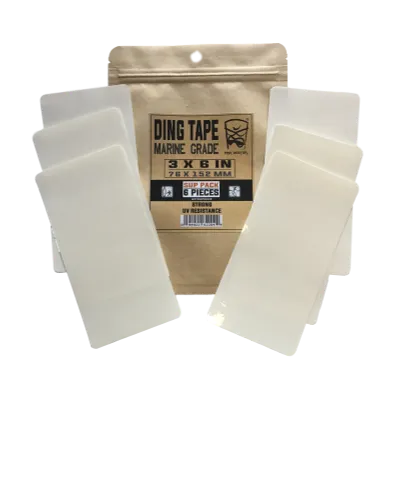
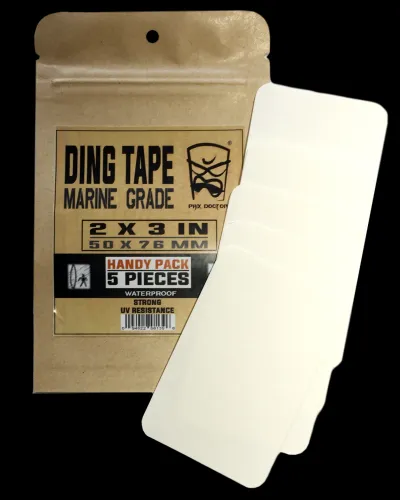
The immediate field fix is ding tape. The Phix Doctor Ding Tape gives "instant relief to protect your board from water damage until you can do a proper repair." It's marine grade, UV resistant, and waterproof — five pieces of 2 in × 3 in (5 cm × 7.5 cm) tape for $7.50. If you're on a SUP and the ding is larger, the SUP Pack - Ding Tape gives you six pieces at 3 in × 6 in for $13.50 — more coverage for a bigger break. The tape buys you time. It is not a repair.
Here's a simple decision path:
- Sealed scratch, no break in the surface — keep paddling, repair when convenient
- Open ding, crack, or exposed foam — tape it before your next session, repair it soon
- Soft spot underfoot or skin that bubbles or flexes away from the foam — get off the water now, repair before you paddle again
If the skin feels spongy or moves independently of the foam when you press it, water is already inside. Paddling on it works the skin loose further. Stop, dry the board out completely, and repair it before the next session.
A soft spot or bubbling skin is the one case where "I'll tape it and see" is the wrong call. Everything else on this list — tape it, then repair it properly.
Hard Board or Inflatable? You Need to Know Before You Buy Anything
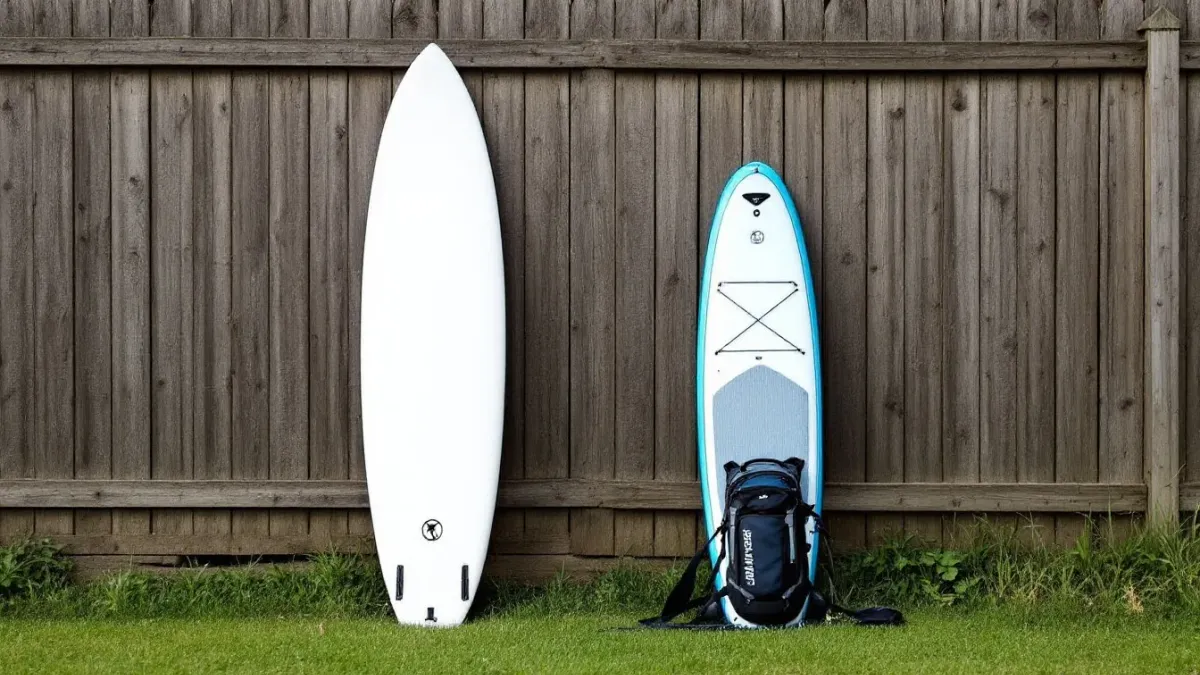
Phix Doctor makes repair kits for hard and composite boards only — if you have an inflatable, nothing in this catalog will fix it.
Here is how to tell which one you have.
Hard boards are rigid. Pick one up and it does not flex. The core is either EPS (expanded polystyrene — the white, grainy foam that looks like a cooler) laminated with epoxy resin, or polyurethane (PU) foam laminated with polyester resin. Soft-tops are also hard boards; they just have a foam or rubber deck layer over that same kind of rigid core. All of these are repaired with resin, which is exactly what Phix Doctor products deliver.
Inflatables (iSUPs) are built from drop-stitch PVC. Roll one up and it fits in a backpack. There is no foam core, no fiberglass skin, no resin anywhere in the construction. When an inflatable gets a hole or a seam separates, you fix it with a PVC patch and a compatible adhesive — a completely different chemistry from anything used on a hard board.
Applying a resin-based repair to an inflatable paddleboard will not hold. Phix Doctor does not make PVC patch kits; an inflatable owner needs to source a PVC-specific repair product elsewhere.
If you are not sure which construction you have, press your thumbnail firmly into the deck. A hard board will not give at all. An inflatable, even when fully pumped, has a slight, drum-like flex under real pressure. When in doubt, check the manufacturer's spec sheet — it will say "EPS/epoxy," "PU/polyester," or "drop-stitch PVC" in the first line of the description.
Once you have confirmed you are holding a hard board, you are in the right place.
Which Kit Do You Actually Need? A Side-by-Side Comparison
Four products cover the four situations a paddleboarder actually runs into: a full repair kit for home, a pocket kit for travel, ding tape for field emergencies, and foam filler when the ding is deep enough to have eaten into the core.
| Product | Price | What It's For |
|---|---|---|
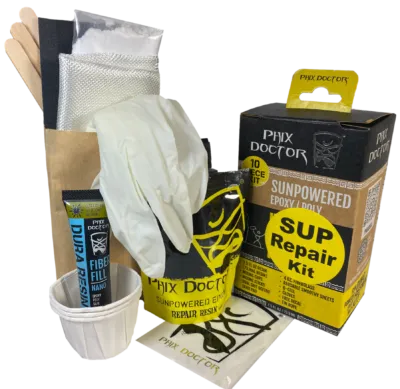
| SUP/Paddleboard Repair Kit | $27.90 | Complete at-home repair — resin, fiberglass, mixing supplies, sanding |
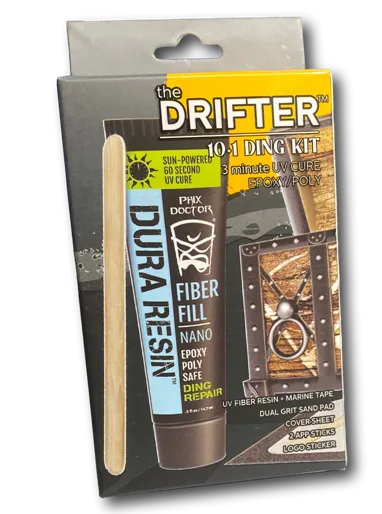
| Drifter 10+1 Travel Ding Kit | $9.60 | Pocket travel kit — resin for 10 dings plus one piece of ding tape |
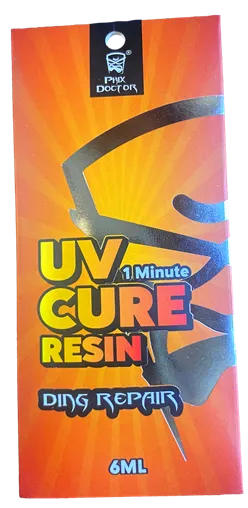
| Deluxe Micro Kit | $4.99 | Glove box or board bag — single-use resin, airline approved |
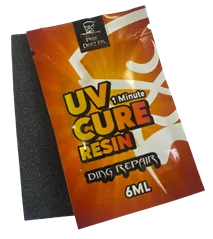
| SunPowered Phix Doctor Micro Kit | $3.90 | On-the-go repair — portable, endless shelf life |
| Phix Doctor Ding Tape | $7.50 | Field emergency — 5 pieces, 2 in × 3 in (5 cm × 7.5 cm) |
| SUP Pack - Ding Tape | $13.50 | Field emergency, larger dings — 6 pieces, 3 in × 6 in |
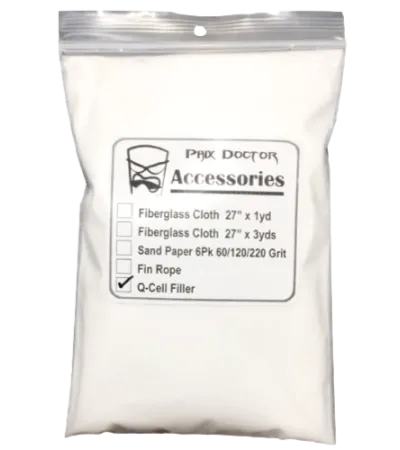
| Q-Cell Foam Filler | $3.50 | Deep dings with foam loss — mix with resin to fill voids |
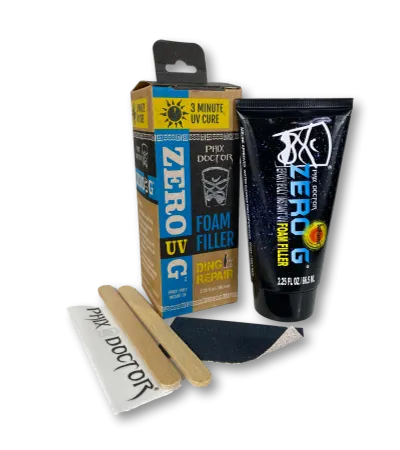
| Zero G Universal UV Foam Filler | $16.80 | Deep dings on the road — 2.25 fl oz (67 ml), airline approved |
The full kit. The SUP/Paddleboard Repair Kit at $27.90 is the right choice for a proper bench repair at home. It includes 7 × 13 in (17.8 × 34.2 cm) of 4 oz e-glass fiberglass cloth, mixing cups, mix sticks, gloves, a dual-grit sand pad, and 0.5 fl oz of UV resin — everything you need to do a structural repair on an EPS or polyurethane board. Resin cures in 2 minutes in the sun.
Pocket kits. The Drifter 10+1 is built for travel. One tube of fiber-filled resin handles 10 average dings, and the kit includes a piece of 2 in × 3 in ding tape for a quick field patch between sessions. It is airline approved. The Deluxe Micro Kit is the one to keep in the glove box — it is also airline approved, and the resin cures in 1 minute in the sun. The SunPowered Phix Doctor Micro Kit is the entry-level pocket option at $3.90 — portable, fiber-filled, safe on delicate EPS and polyurethane cores, and it cleans up with soap and water.
Ding tape alone. If you just want something to slap over a crack and get back in the water, the standard Phix Doctor Ding Tape gives you 5 pieces at 2 in × 3 in and carries a 5-year guarantee. The SUP Pack gives you 6 pieces at 3 in × 6 in — the larger format makes more sense for a SUP because the dings tend to be wider. Both are marine grade, UV resistant, and waterproof.
Foam filler. If the impact removed foam — you can see white material or a void below the glass — tape alone won't cut it and neither will resin by itself. Q-Cell Foam Filler micro balloons mix with resin to fill the void without adding weight, and they dry white so they sand cleanly. For travel, the Zero G Universal UV Foam Filler is airline approved and comes in a 2.25 fl oz (67 ml) tube.
Pouring resin into a large void without filler adds unnecessary weight and can leave a soft spot. If you can see exposed foam, mix Q-Cell into your resin first.
How to Repair a Paddleboard Ding, Step by Step
An open ding is not a cosmetic problem — it is a water entry point. Every session you skip the repair, water works deeper into the foam core, adds weight, and eventually separates the skin from the foam underneath. A sealed scratch can wait; an open ding cannot.
The SUP/Paddleboard Repair Kit contains everything below except the Q-Cell for deep voids, which you buy separately if you need it.
How it works: repairing a paddleboard ding
- 1
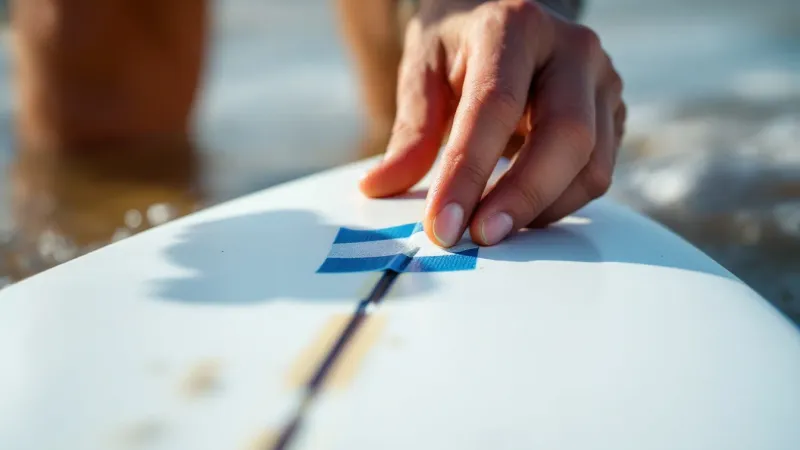 Assess and tape.Look at the ding closely. If the fiberglass — the woven glass-fiber cloth that forms the hard outer skin of the board — is cracked, lifted, or missing, water is getting in. If you are still at the beach or the board is wet, press a piece of ding tape over the opening right now. It is a temporary seal, not a repair, but it stops water entry until you can work properly.
 - 2
 Dry the board.This step is easy to skip and expensive to get wrong. Resin applied over trapped moisture seals that water inside the board permanently. Set the board ding-side down in a warm spot out of direct sun and leave it until no more moisture comes out. How long depends on how wet it got — a fresh small ding might need a few hours; a board that has been taking on water for weeks needs longer.
 - 3
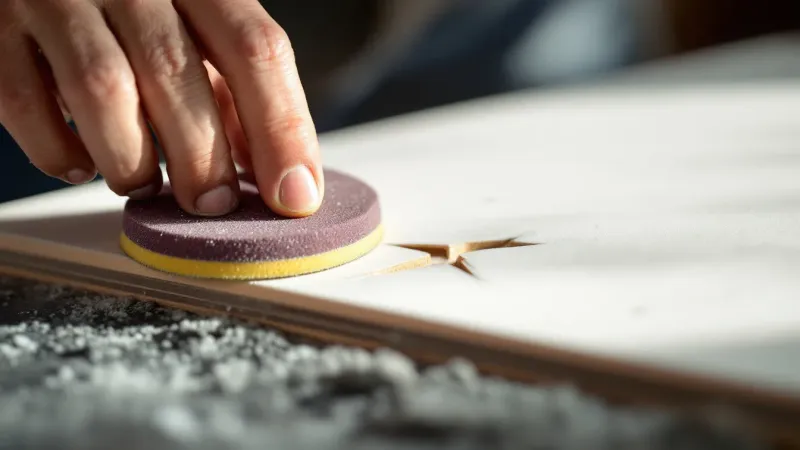 Remove loose glass.Once the board is dry, use the dual-grit sand pad included in the kit to clean up any cracked or lifted fiberglass around the ding. You want a clean, stable edge for the repair to bond to. Loose glass under a repair will fail.
 - 4
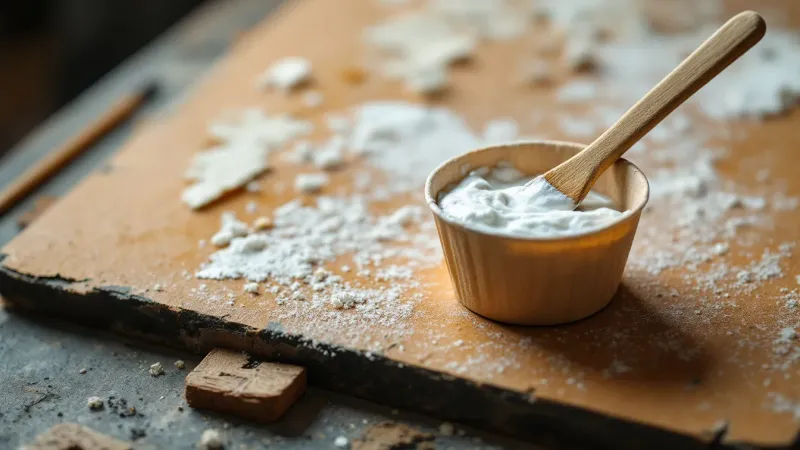 Fill deep voids.If the ding has punched through the fiberglass and removed foam, you have a void to fill before you lay cloth. Mix Q-Cell Foam Filler — lightweight hollow microspheres — with resin from the kit to your preferred thickness. Q-Cell fills large voids without adding meaningful weight, dries white, and sands easily. Apply it to the void and let it set before moving on. The Q-Cell Foam Filler is $3.50 and sold separately from the kit.
 - 5
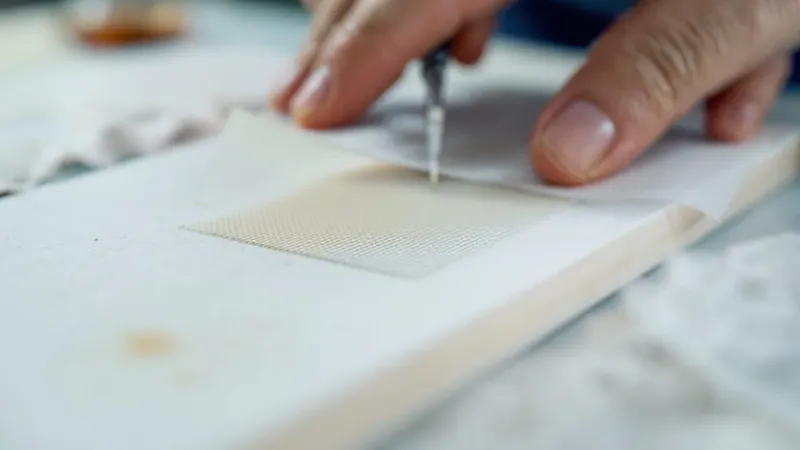 Lay fiberglass cloth.For any structural ding — meaning the foam is exposed or the glass is missing over an area — cut a piece of the 7×13 in (17.8×34.2 cm) 4 oz e-glass cloth included in the kit to fit the repair area. E-glass, or electrical glass, is a plain-weave woven cloth compatible with the UV resin in the kit. Saturate the cloth with resin so every fiber is wet.
 - 6
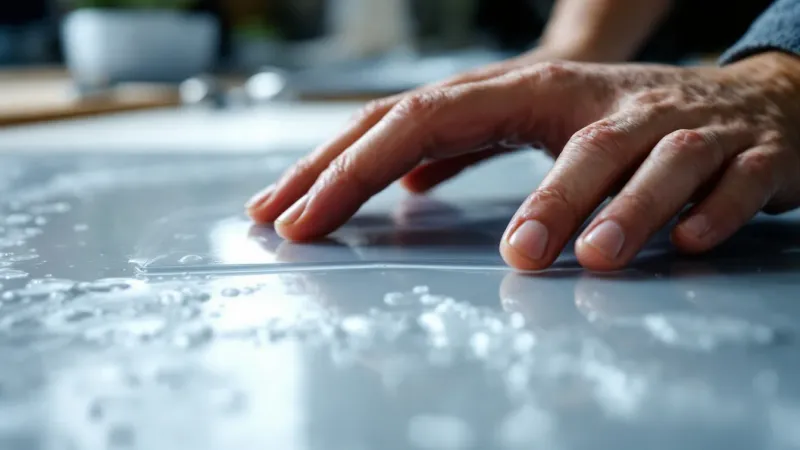 Apply resin and cover with a Smoothy Sheet.Dispense UV resin over the cloth or directly onto the ding for smaller repairs. Then lay a Smoothy Sheet — the plastic cover sheet included in the kit — flat over the wet resin and smooth out any bubbles. The cover sheet creates an oxygen-free surface against the resin. UV resin will not cure fully if it is exposed to air; the Smoothy Sheet is what makes a complete cure possible.
 - 7
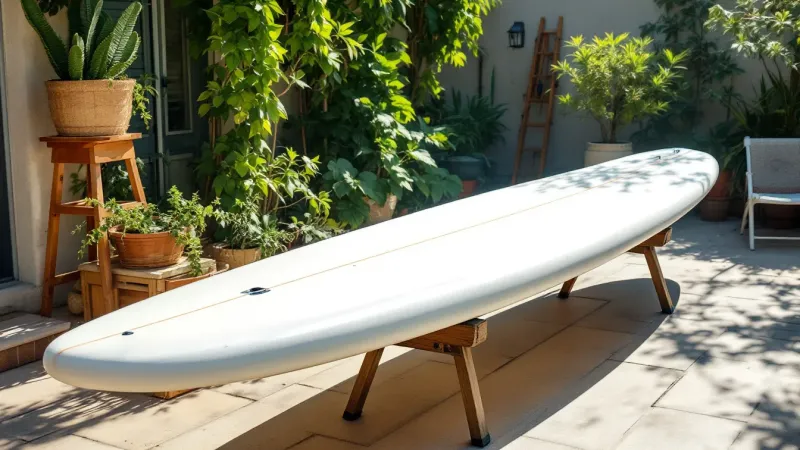 Cure in sunlight.Carry the board into direct sun. The UV resin in the SUP Kit cures in 2 minutes in the sun. On a delicate foam core, flash the repair in and out of the sun in short intervals rather than leaving it sitting in full sun — that is what keeps a heat-sensitive core from overheating while the resin still cures.
 - 8
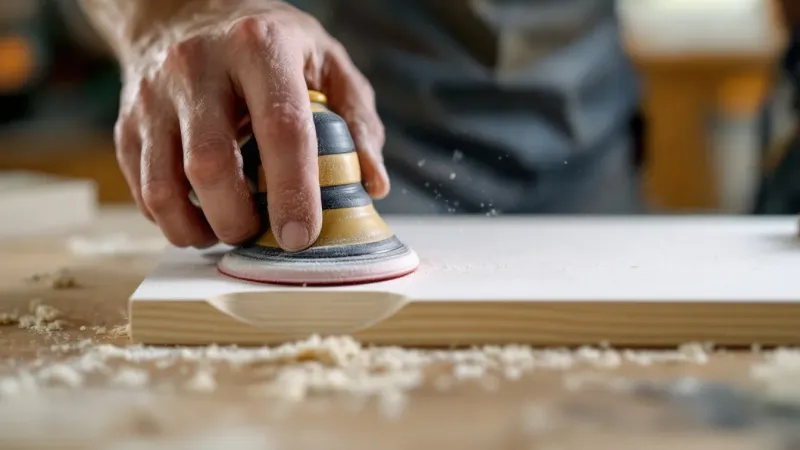 Sand and finish.Peel the Smoothy Sheet. Use the dual-grit sand pad — start on the coarser side to knock down any high spots, finish on the finer side — until the repair is flush with the surrounding surface. Soap and water clean up any uncured resin residue.
The UV resin in the SUP Kit is formulated to be safe on delicate Styrofoam (EPS) cores. Not every resin is. If your board is EPS, check that whatever you are about to use states it is safe on EPS or Styrofoam cores before it touches the foam.
What People Get Wrong: The Two Failure Modes
Two mistakes account for most bad repairs. Neither one requires a new kit to fix — just a change in technique.
Mistake one: leaving the board in full sun to cure.
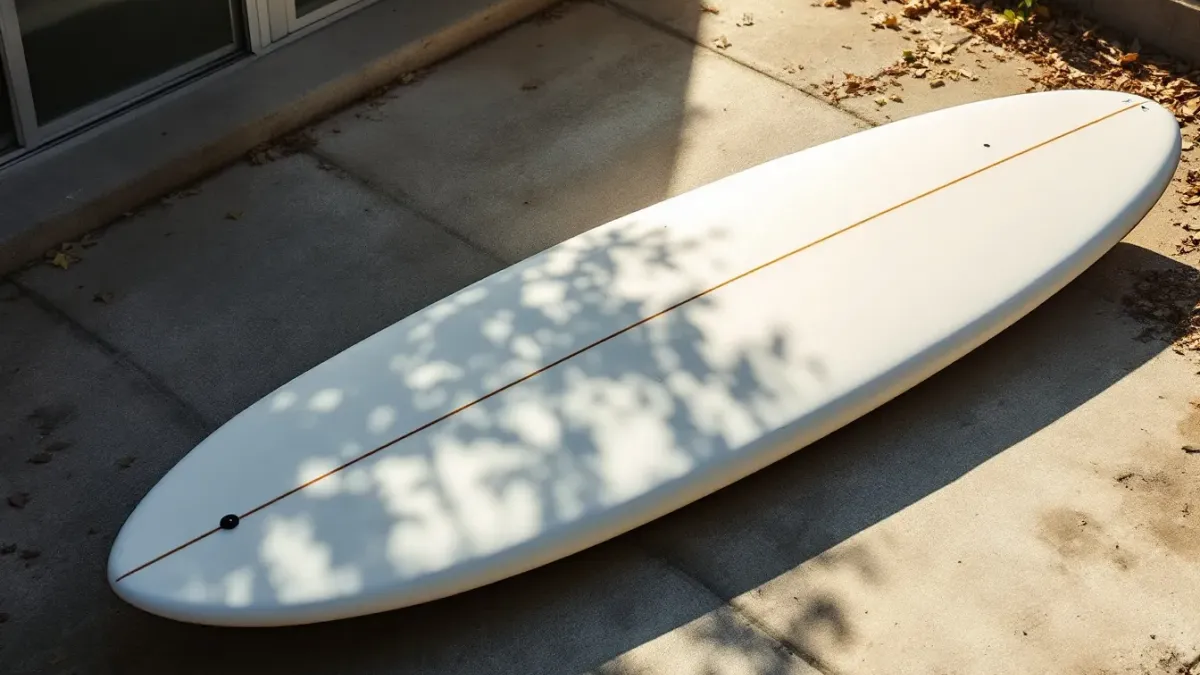
UV resin cures fast, and it's tempting to set the board in direct sunlight and walk away. The problem is heat, not light. EPS foam — the white Styrofoam-type core inside epoxy boards and most hard paddleboards — is heat sensitive. The resin in the SUP/Paddleboard Repair Kit is safe on delicate Styrofoam cores, and so is the resin in the Deluxe Micro Kit. Safe on the core means the resin itself won't attack the foam — it does not mean you can bake the board. The fix is simple: flash the board in and out of sunlight in short bursts instead of leaving it sitting in full sun. Roughly 10 to 15 seconds of direct light, then back into the shade, and repeat. The resin still cures. The core stays intact.
Mistake two: skipping the cover sheet.
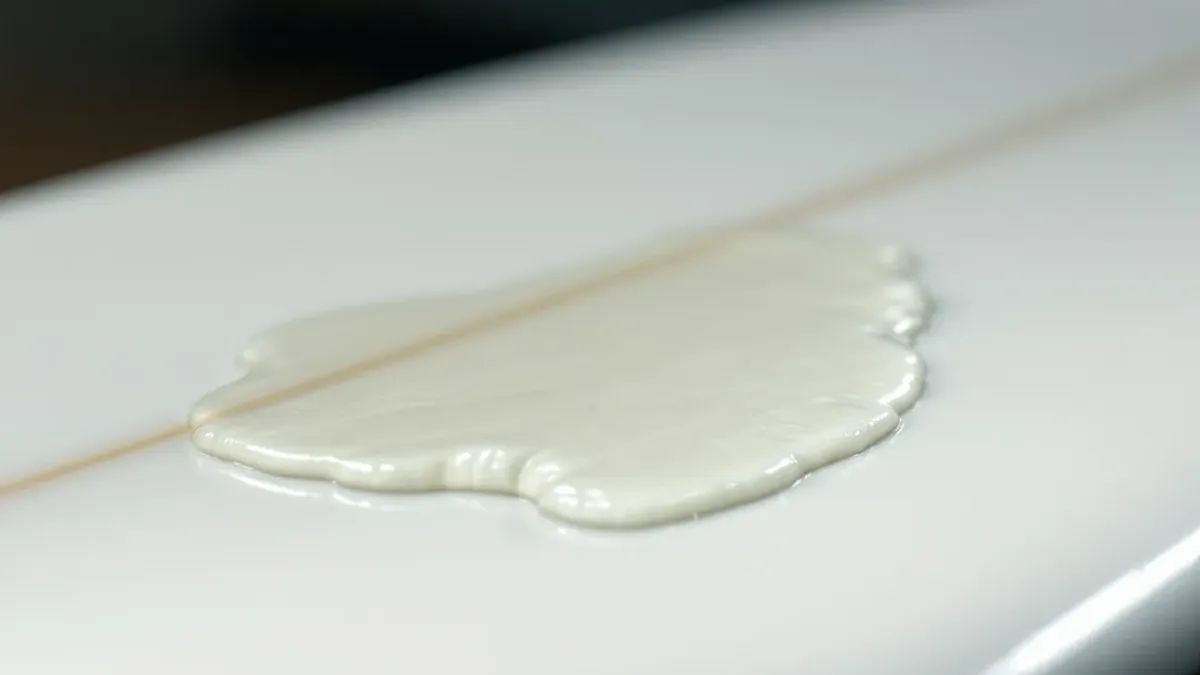
UV resin cures by a photochemical reaction. Oxygen at the surface interferes with that reaction. If you cure the resin without a cover sheet — the Smoothy Sheet included in the kit — the top layer never fully hardens. It stays tacky, sometimes permanently. The cover sheet presses against the resin and keeps oxygen out while the light does its work. That is the only reason the sheet is there, and it is not optional. If your repair is still sticky after curing, this is almost certainly why.
Re-sand the surface lightly, apply a thin fresh layer of resin, lay the Smoothy Sheet flat with no air bubbles underneath, and cure again. The stickiness is not a resin defect — it is an oxygen problem.
What Else You Need for Bigger Repairs
The SUP Kit handles most dings, but once a repair gets into missing foam or cracked-through laminate, you'll burn through supplies faster than the kit expects. Pull these together before you start, not halfway through.
Extra fiberglass cloth. The Phix Doctor 4oz Fiberglass Cloth is 4 oz per square yard, plain weave e-glass, 27 inches wide, and works with both polyester and epoxy resins. A single ding might only need a patch the size of your palm, but a long rail crack or a buckle repair can eat through a yard quickly. If you're rebuilding more than one layer, have extra on hand. It's $13.00 a yard.
Q-Cell Foam Filler. When a ding has gouged out actual foam, you need to fill that void before you glass over it. The Q-Cell Foam Filler comes in a 14 oz (volume) bag for $3.50. You mix the micro balloons with resin to whatever thickness you need, pack the void, and let it cure. It dries white and sands easily. Because it's hollow spheres mixed into resin rather than solid material, it doesn't add meaningful weight to the board — that matters on a SUP.
Zero G UV Foam Filler for travel. If you're flying to a trip and want foam filler in your bag, the Zero G UV Foam Filler is airline approved. It's a 2.25 fl oz (67 ml) tube at $16.80. It won't replace a full bag of Q-Cell for a major repair, but it gets you through a travel ding without checking a bag full of chemicals.
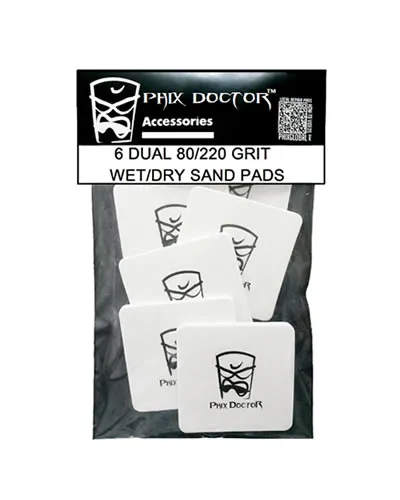
More sand pads. The 6 Dual Grit Sand Pads are 3 in × 3 in, 80/150 grit, $3.95 for a six-pack. They're made with white silica, so the abrasive doesn't leave dark specks in the cured repair the way darker silica pads can. On a bigger repair you'll go through more than one pad — the 80 side cuts the high spots down, the 150 side smooths it out before you finish.
Resin has a working time. If you run out of cloth or filler mid-repair, you either rush or waste a batch. For anything larger than a small pressure ding, have all four of these items on your bench before you open the resin.
Frequently asked questions
Can I use a paddleboard repair kit on an inflatable SUP?
No. Inflatable paddleboards (iSUPs) are made from drop-stitch PVC and are repaired with a PVC patch and adhesive. Resin-based kits like the Phix Doctor SUP/Paddleboard Repair Kit are designed for hard boards — epoxy/EPS, polyester/PU, and soft-tops — and will not bond to PVC.
How long does paddleboard repair resin take to cure?
Cure time depends on the specific product. The SUP/Paddleboard Repair Kit resin cures in 2 minutes in the sun. The Deluxe Micro Kit resin cures in 1 minute. Both use UV (sunlight-activated) resin, so cure time is measured from sun exposure, not from when you apply it.
What is ding tape and how long does it last?
Ding tape is a marine-grade, UV-resistant, waterproof tape you press over an open ding to stop water entering the core until you can do a resin repair. Phix Doctor's standard Ding Tape carries a 5-year guarantee. It is a temporary fix, not a permanent repair.
Is the Phix Doctor SUP repair kit safe on EPS (Styrofoam) cores?
Yes. The SUP/Paddleboard Repair Kit is specifically described as safe on delicate Styrofoam cores. The Deluxe Micro Kit and the standard Micro Kit are also stated as safe on EPS and polyurethane cores.
Why is my UV resin still tacky after it cures in the sun?
A tacky surface usually means the repair was done without a cover sheet (Smoothy Sheet). Oxygen at the surface inhibits the UV cure reaction, leaving the top layer soft. Always lay the clear cover sheet over wet resin before exposing it to sunlight; the sheet excludes oxygen and allows the surface to cure hard.
Tags:
paddle board repair kitsup repair kithow to repair a paddle board dingbest repair kit for a paddleboardhow long does paddleboard repair resin take to curePhix DoctorSUP/Paddleboard Repair KitDrifter 10+1 Travel Ding KitProducts in this guide
SUP/Paddleboard Repair Kit by Phix Doctor
$27.90
The Drifter 10+1 Travel Ding Kit
$9.60
Deluxe Micro Kit
$4.99
SunPowered Phix Doctor Micro Kit
$3.90
SUP Pack - Ding Tape (3"x6")
$13.50
Phix Doctor Ding Tape
$7.50
Phix Doctor Q-Cell Foam Filler
$3.50
Zero G Universal UV Foam Filler
$16.80
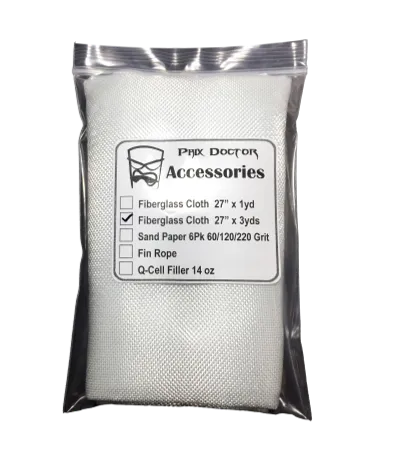
Phix Doctor 4oz Fiberglass Cloth
$13.00